

Table of Contents
- Where to Find Vintage Band Shirts: Your Best Sources
- Authentic Band Merch vs Vintage: Key Differences
- How to Spot Fake Vintage Band Shirts
- Key Eras of Vintage Band Shirts and What to Collect
- Price Guide: What Vintage Band Shirts Actually Cost
- Care Instructions for Vintage Cotton Shirts
- Conclusion
Last Updated: August 26, 2026
Where to Find Vintage Band Shirts: Your Best Sources
Vintage band shirts are highly sought-after in streetwear culture and music memorabilia collecting. At Rockteez Apparel, we work with music fans daily and hear one question constantly: where to source genuine vintage band apparel without getting burned. The best sources are thrift stores, reputable online resale platforms, and specialty vintage dealers. But knowing where to look is only half the battle, the other half is knowing what you're looking at when you find it.
Thrift Stores and Second-Hand Markets
Thrift stores remain the most accessible entry point into vintage band shirt collecting. Goodwill, Salvation Army, and independent secondhand shops regularly cycle through donated clothing, and tour shirts from the 1980s and 1990s surface regularly. The catch is consistency: you may visit the same store ten times and find nothing, then walk in on a Tuesday and pull a faded Black Sabbath concert tee from 1983.
Flea markets and estate sales are often more reliable for concentrated finds. Estate sales yield deadstock pieces that have sat unworn in closets for decades, meaning better condition and more intact screen-printed graphics. The key discipline: go often, go early, and learn the tag systems. Stores using color-coded tags rotate stock weekly, so timing your visits around rotation gives you first access to new arrivals.
Online Resale Platforms
Online resale has transformed vintage band shirt collecting. Platforms like eBay, Depop, and Etsy host thousands of listings for concert tees and rock memorabilia. eBay remains the deepest market for rare finds, with auction-style listings that surface genuinely rare pieces from the 1960s and 1970s.
The tradeoff is that you can't physically inspect the shirt before buying. This makes tag identification and seller reputation critical. Look for sellers who photograph the tag, collar, print, and hem separately. If a listing only shows the front graphic, treat it with skepticism.
According to eBay's vintage clothing category guidelines, sellers must accurately describe condition, era, and reproduction status. Still, enforcement is inconsistent, so buyer education matters most.
Licensed Retailers and Official Merchandise Stores
Officially licensed band merchandise is not the same as vintage, but it fills a real gap. If you want a shirt that accurately represents a band without secondhand market uncertainty, licensed retailers are the right choice.
Rockteez Apparel carries 100% officially licensed band merchandise across classic rock, metal, country, blues, and punk, with an athletic fit that avoids the boxy, oversized cut plaguing most band tees. Officially licensed gear directly supports the artists.
Authentic Band Merch vs Vintage: Key Differences
Authentic band merch is officially licensed, currently produced apparel carrying legal rights to reproduce artist imagery. Vintage band shirts are original pieces produced during a specific era, typically pre-2000, carrying historical and collectible value based on age, rarity, and condition.
The practical difference comes down to provenance, construction, and intent. Vintage shirts were made for shows or mail order, often on thin ring-spun cotton with single-stitch construction and screen-printed graphics that fade naturally. Modern licensed merch uses updated manufacturing standards, heavier fabric, double-stitched hems, and more durable prints.
Neither is inherently better. Vintage offers authenticity and collectibility. Licensed merch offers quality assurance and artist support. The mistake many buyers make is assuming "old-looking" equals authentic vintage, which is exactly what reproduction manufacturers bank on.
How to Spot Fake Vintage Band Shirts
Spotting fake vintage band shirts is a skill that takes time, but a few reliable markers separate originals from reproductions quickly.
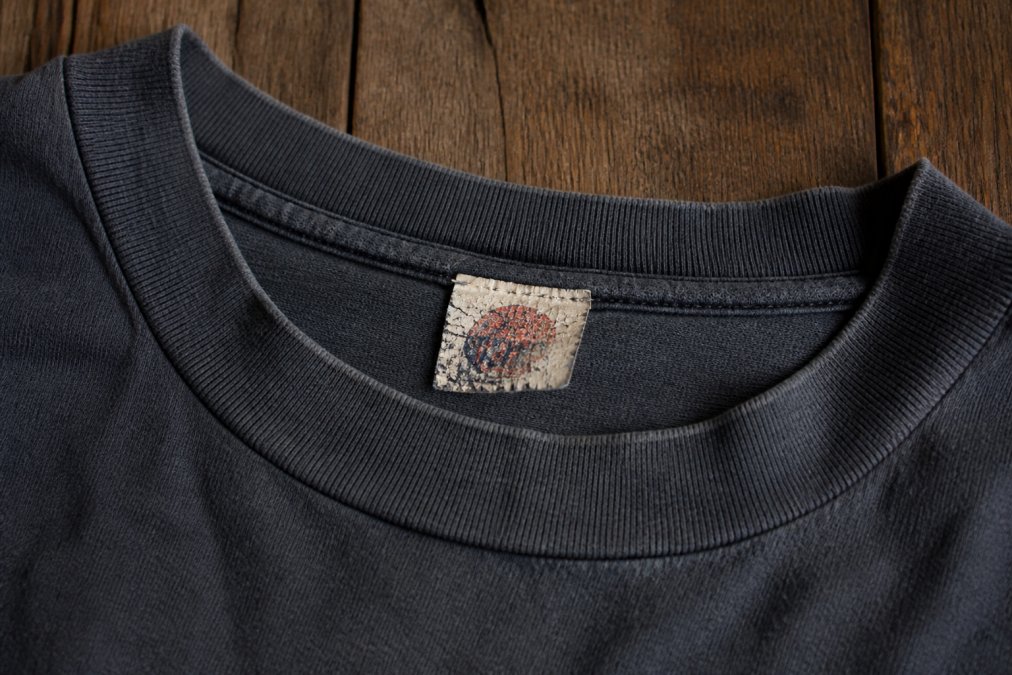
Tag Identification and Single-Stitch Construction
The tag is your first and most reliable authentication tool. Shirts produced before the mid-1990s almost universally feature single-stitch construction at sleeve and bottom hems. Run your finger along the bottom edge: a single row of stitching indicates pre-1994 manufacture in most cases. Double-stitched hems became standard after that point.
Tag brands matter enormously. Original vintage concert tees from the 1970s through early 1990s were typically printed on blanks from Fruit of the Loom, Hanes, Screen Stars, and Stedman. Each era has distinct typography, copyright text, and sizing labels. A shirt claiming to be from 1982 with a tag format introduced in 1997 is an immediate red flag.
The Vintage Fashion Guild's label resource database is a comprehensive free reference for dating garment tags by manufacturer and era. Cross-referencing a tag takes about two minutes and can save significant money.
Print Quality and Faded Aesthetic Clues
Authentic vintage screen-printed graphics age in a specific way. The ink sits on top of the fabric, so over decades it cracks, fades, and sometimes flakes in patterns consistent with actual wear. The faded aesthetic has an organic, uneven quality difficult to replicate artificially.
Reproduction prints tend to look uniformly distressed, with consistent cracking patterns or even fading. Authentic aging concentrates in high-wear areas: the chest center where fabric flexes most, around the collar, and wherever the shirt has been folded repeatedly.
Original tour shirts from the 1980s and 1990s typically listed actual tour dates, specific venue names, and city stops. If a shirt claims to be a 1987 Metallica tour shirt but tour dates don't match documented concert history, it's a reproduction.
Key Eras of Vintage Band Shirts and What to Collect
1960s and 1970s: The Originals
Shirts from the 1960s and early 1970s represent the rarest and most historically significant band apparel. These are the originals: pieces from an era before band merchandise was formalized, when shirts were often screen-printed locally and sold at shows in limited quantities. The fabric is typically thin, soft cotton that has aged into something almost impossibly soft after decades of washing.
Collecting from this era requires significant expertise and budget. Authentic pieces surface rarely, and condition varies enormously. For most collectors, this era is more about aspiration than active acquisition.
1980s and 1990s: The Golden Age of Tour Shirts
The 1980s and 1990s represent the golden age of vintage band shirt collecting. The merchandise industry matured during this period, producing high-quality screen-printed shirts for arena rock, heavy metal, punk, and early hip-hop tours at scale.
This era introduced the classic concert tee format: bold graphics, tour dates on the back, and distinctive ring-spun cotton that softens beautifully with age. Bands like Iron Maiden, Metallica, Guns N' Roses, and Nirvana produced shirts now highly sought after. Rap and hip-hop merchandise from this era, including early run shirts from N.W.A and Public Enemy, has also seen significant collector interest.
According to Smithsonian's overview of American popular music history, the 1980s represented a pivotal commercial expansion of rock and metal culture, directly driving the merchandise boom that produced most of today's collectible vintage band apparel.
Price Guide: What Vintage Band Shirts Actually Cost
Pricing for vintage band shirts varies enormously based on era, band, condition, and rarity:
Era |
Band Tier |
Condition |
Typical Market Range |
|---|---|---|---|
1960s-1970s |
Major act (Stones, Zeppelin) |
Good to excellent |
Several hundred to several thousand dollars |
1980s |
Arena rock / metal |
Good |
$80-$300+ |
1980s |
Cult / underground |
Good |
$40-$150 |
1990s |
Grunge / alternative |
Good |
$60-$250 |
1990s |
Rap / hip-hop |
Good |
$100-$400+ |
Any era |
Poor condition |
Fair |
$15-$50 |
Original tags still attached, documented provenance, deadstock condition, or shirts tied to historic shows command significant premiums. Always request detailed photographs of any holes, staining, fading, or print damage before buying online.
For officially licensed band merchandise that won't depreciate and doesn't require authentication, check current pricing on the Rockteez Apparel website.
Care Instructions for Vintage Cotton Shirts
Vintage cotton shirts require specific care to preserve both fabric and screen-printed graphics. The biggest mistake collectors make is washing vintage pieces like modern clothing.
Washing:
- Turn the shirt inside out before every wash
- Use cold water exclusively; hot water accelerates fabric degradation and print cracking
- Choose a gentle or delicate cycle with low agitation
- Use mild detergent without optical brighteners
Drying:
- Air dry flat whenever possible; hanging stresses the collar and distorts the body
- If machine drying is necessary, use the lowest heat setting and remove while slightly damp
- Never wring or twist the fabric
Storage:
- Fold rather than hang for long-term storage; hangers stress the collar and shoulders
- Store in a cool, dry location away from direct sunlight
- For valuable pieces, use acid-free tissue paper between folds to prevent permanent crease lines
The Textile Society of America's guidelines on caring for historic garments recommends minimal intervention as the core principle for preserving aged cotton.
Frequently Asked Questions
What is the best place to get vintage band shirts?
Thrift stores, estate sales, and online resale platforms are the top sources for authentic vintage band shirts. Thrifting rewards patience but delivers the best prices. Online platforms give you access to a global second-hand market with search filters by era and band. For officially licensed band apparel with a modern fit and guaranteed authenticity, dedicated retailers like Rockteez Apparel are a reliable alternative to the unpredictable vintage market.
How can you tell if a band shirt is truly vintage?
Check the construction first: shirts made before the mid-1990s typically use single-stitch hems at the sleeves and bottom. Look at the tag — older shirts carry brands like Screen Stars, Hanes Beefy-T, or Fruit of the Loom with specific fonts and country-of-origin labels. The screen print should show natural cracking and fading consistent with age. Bright, crisp prints on a shirt claiming to be from the 1980s are a strong sign of a modern reproduction.
Why are vintage band shirts so expensive?
Scarcity drives the price. Original concert tees from tours in the 1970s through 1990s were produced in limited runs and sold only at shows. Decades of wear, washing, and loss have made surviving examples genuinely rare. Collector demand from both music fans and streetwear culture has pushed prices higher. Shirts tied to landmark tours, deceased artists, or historically significant concerts command the most. Condition, print clarity, and documented provenance all affect final value.
Where can I find vintage 80s and 90s band t-shirts?
Estate sales and thrift stores in areas with active music scenes from those decades are strong offline options. Online resale platforms let you search specifically by decade and band. Specialty vintage clothing dealers often curate collections of rock memorabilia and tour shirts from those eras. If you want the look without the uncertainty of authentication, officially licensed graphic tees styled after classic designs — available from retailers like Rockteez Apparel — deliver a reliable option.
Are reproduction vintage band shirts worth buying?
Reproductions fill a real gap: they deliver the retro style and faded aesthetic at a fraction of the cost of an original. The trade-off is collectible value — a reproduction will not appreciate the way an authentic vintage shirt can. For fans who want to wear the shirt rather than preserve it as an investment, a high-quality licensed reproduction or officially licensed band apparel is a practical choice. Just confirm the seller is licensed so your purchase supports the artist.
How should I wash vintage band shirts to avoid damage?
Turn the shirt inside out before washing to protect the screen-printed graphic. Use cold water on a gentle cycle and a mild detergent without bleach or optical brighteners. Skip the dryer — heat degrades ring-spun cotton fibers and causes prints to crack faster. Lay the shirt flat or hang it to air dry away from direct sunlight. For very fragile pieces, hand washing in cold water is the safest method. Store folded rather than on a hanger to prevent collar stretching.